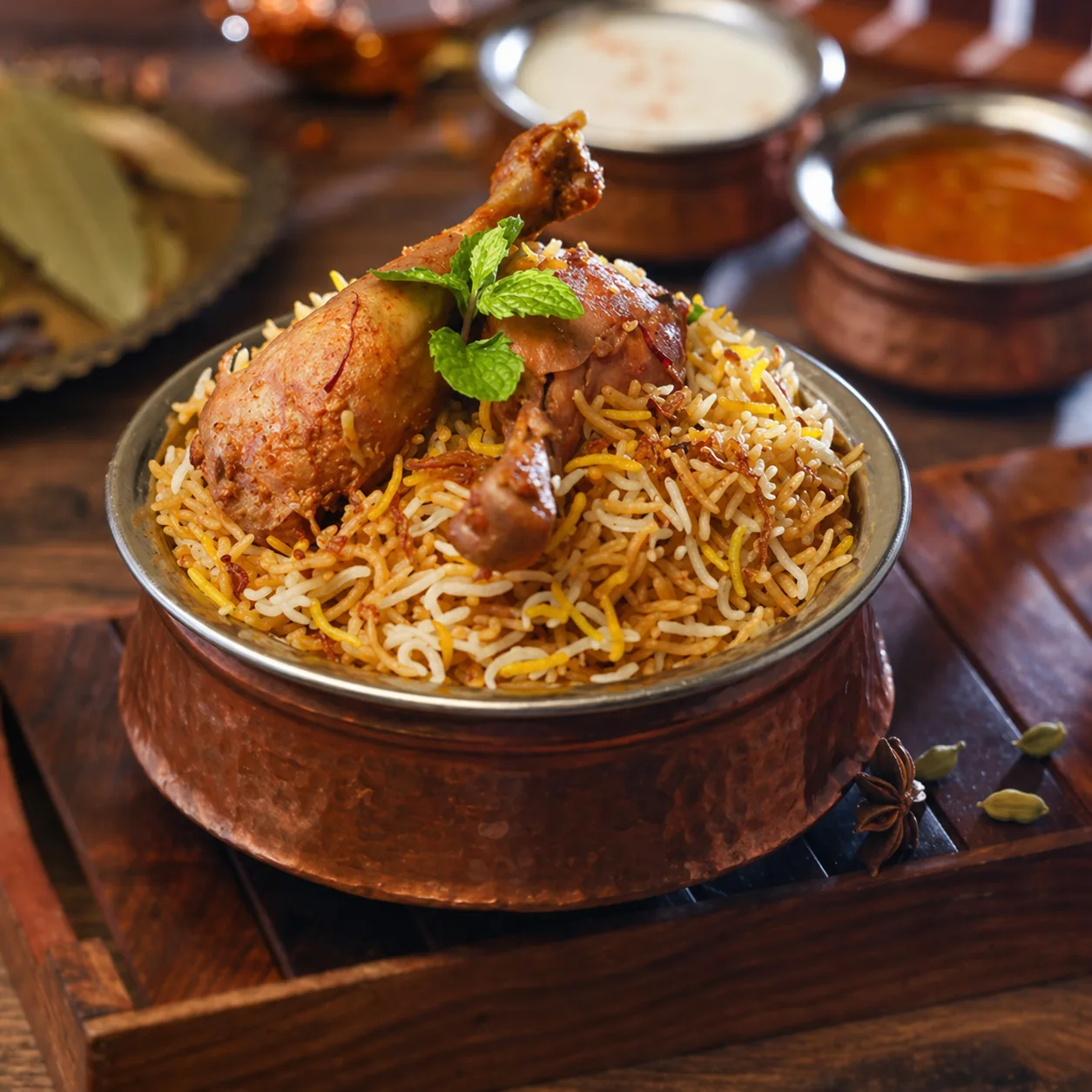
Not every dish that carries the name "biryani" is actually prepared the same way, which is part of why a search for best biryani near me so often leads to inconsistent results. Some restaurants layer meat and rice together and steam them slowly. Others cook everything in one pot and call it biryani anyway. The difference between those two approaches shows up immediately in texture, aroma, and how the flavors build from the first bite to the last, which is exactly what separates a kitchen worth returning to from one that only gets the name right. Before comparing options, it helps to look at what an Indian restaurant in Johns Creek, GA actually needs to get right to earn that reputation.
This guide breaks down how proper biryani is made, what to look for when judging a plate, and where to find it locally.
Biryani is technically defined by its method, not just its ingredients. At its core, it requires basmati rice and meat (or vegetables) to be cooked separately to a specific point, then combined and finished together under a sealed lid, allowing the rice to absorb aroma and flavor from the meat and spices through trapped steam rather than through direct mixing. A dish that skips this layering and steaming process and simply cooks rice and meat together in one pot from the start is closer to a pulao than a true biryani, even if it is labeled and sold as one.
The technique behind proper biryani is known as "dum," an Urdu and Hindi term roughly meaning "to breathe" or "to steam." Partially cooked basmati rice is layered over marinated, partially cooked meat in a heavy-bottomed pot, then the lid is sealed, traditionally with a ring of dough, to trap steam inside completely. The pot is then cooked over low heat for an extended period, allowing the rice to finish cooking gradually in the fragrant steam released by the meat and whole spices below it. This slow, sealed cooking process is what produces biryani's signature separate, fluffy grains and its layered intensity of flavor from top to bottom, rather than a uniform taste throughout.
Diners searching for best biryani near me often end up comparing it, sometimes unknowingly, against pulao, a related but distinct dish. Pulao is prepared by cooking rice and meat or vegetables together in the same pot from the start, typically in less liquid and with fewer whole spices than biryani requires. Biryani, by contrast, relies on the separate-then-layered dum method described above, along with a heavier use of whole spices like cardamom, cloves, and saffron. The result is that pulao tends to taste more uniform throughout, while a properly made biryani should taste noticeably different depending on which layer of the pot a spoonful comes from.
A few visible and textural cues tend to separate an authentic, dum-cooked biryani from a shortcut version made to save time. Authentic biryani rice should hold together as long, separate, individual grains rather than clumping into a sticky mass, which usually signals the rice was overcooked in liquid rather than steamed separately. The dish should also show visible color and flavor variation between layers, often a golden or reddish hue near the top from saffron or fried onions, rather than a flat, uniform color throughout the plate. Finally, the aroma should be noticeably fragrant, carrying whole spice notes like cardamom and star anise, rather than smelling primarily of raw onion or tomato, which points to a curry-style base rather than proper dum preparation.
Hyderabadi biryani, developed in the royal kitchens of the Nizams of Hyderabad, is considered one of the most technically demanding regional styles because it typically cooks the meat and rice together in their final sealed pot from a raw or lightly marinated state, known as "kacchi" style, rather than fully pre-cooking the meat separately, as many other regional styles do. This requires precise timing and heat control, since undercooking risks raw meat while overcooking dries out the rice. Other regional styles, such as Kolkata or Lucknowi biryani, tend to use milder spicing and different signature additions, like potatoes or boiled eggs, reflecting their own local culinary histories. Understanding which style a restaurant specializes in helps explain why two dishes both called "biryani" can taste so different from each other.
House of Biryanis & Kebabs in Johns Creek prepares its Hyderabadi Chicken and Goat Dum Biryani using the traditional kacchi dum method described above, layering marinated meat and basmati rice before sealing and slow-cooking them together. This is served alongside Tandoori Chicken, Goat Haleem, South Indian tiffin items, and Indo-Chinese dishes, all within a fully halal kitchen. For a search like best biryani near me, that traditional dum preparation is the detail most worth confirming before ordering, since it is the single biggest factor separating an authentic biryani from a shortcut version. You can review the full Indian restaurant menu to see the biryani options listed alongside the kebab, South Indian, and Indo-Chinese sections.
Biryani uses the dum method, layering separately cooked rice and meat before sealing and steaming them together, producing distinct flavor layers. Pulao cooks rice and meat together in one pot from the start, typically with fewer whole spices, resulting in a more uniform flavor throughout.
Look for sticky or clumped rice rather than long, separate grains, a flat color throughout the dish instead of visible layering, and an aroma dominated by raw onion or tomato rather than whole spices like cardamom and saffron. These are common signs of a pre-mixed or rushed preparation.
Hyderabadi biryani is typically prepared kacchi-style, meaning raw or lightly marinated meat is layered with partially cooked rice and cooked together in a sealed pot, requiring precise timing. Other regional styles often pre-cook the meat fully before layering, resulting in a different texture and flavor development.
Yes. Diners who prefer takeout can order Indian food online for pickup, and dum-cooked biryani generally travels and reheats well since the flavors continue to develop after cooking.
Knowing what actually goes into a proper biryani, rather than judging by the name alone, makes it far easier to tell a genuinely well-made plate from a rushed one the next time a search for best biryani near me turns up a long list of options. A kitchen that can speak specifically about its preparation method, rather than giving a vague answer, is usually the more reliable choice regardless of how it ranks on a map. For questions about specific preparations, catering, or current menu availability, you can contact House of Biryanis & Kebabs in Johns Creek directly.
House of Biryanis & Kebabs — 11030 Medlock Bridge Road, Johns Creek, GA 30097



Find Us
Business Hours