Halal food is a term many diners recognize without fully understanding what it actually requires. It is often assumed to simply mean "no pork," but the standard covers far more than a single excluded ingredient, touching everything from how an animal is raised to how a kitchen prepares and stores its food. For diners trying to make an informed choice, understanding what halal certification actually involves makes it much easier to evaluate whether an Indian restaurant in Johns Creek, GA genuinely meets that standard or only avoids the most obvious ingredients.
This guide breaks down what halal certification requires, how it differs from similar dietary standards, and what to look for when choosing a halal restaurant.
Halal is an Arabic term meaning "permissible" under Islamic law, and when applied to food, it governs which ingredients can be used and how meat must be prepared. The standard prohibits pork and its derivatives, alcohol as an ingredient, and meat from animals not slaughtered according to Islamic method, known as zabiha. Beyond the animal itself, halal certification also extends to how food is processed, since cross-contamination with non-halal ingredients or shared equipment can affect whether a dish still qualifies.
Halal certification is not a single, universal stamp, but a process that typically involves a certifying body verifying an establishment's sourcing, preparation methods, and storage practices. Meat must come from animals slaughtered by a trained individual who follows the zabiha method, which includes a specific invocation and a swift cut to the throat intended to minimize the animal's suffering. Beyond the slaughter itself, certifiers often review whether halal and non-halal ingredients are stored separately, whether shared cooking surfaces are properly cleaned between uses, and whether any hidden non-halal ingredients, such as certain gelatins or alcohol-based extracts, have made their way into sauces or marinades.
The most common misconception is that halal food is simply "food without pork," when the standard actually covers the full chain from animal welfare and slaughter method to ingredient sourcing and kitchen handling. Another frequent misunderstanding is that halal food is inherently spicier or tied to a specific cuisine, when in reality halal certification applies across countless cuisines worldwide, not just Indian or Middle Eastern cooking. A third misconception is that any restaurant claiming to be halal is automatically certified, when certification actually requires documentation and, often, regular audits by a recognized certifying body rather than a restaurant’s own claim.
Halal and kosher dietary laws share some structural similarities, since both require a specific slaughter method and both prohibit certain animals entirely, such as pork. Where they diverge is in the details: kosher law prohibits mixing meat and dairy within the same meal, a restriction halal does not share, while halal law prohibits alcohol as an ingredient in a way that kosher law does not. The slaughter methods themselves also differ slightly in ritual and blessing, even though both are intended to be swift and to drain blood fully from the animal. A dish that is halal is not automatically kosher, and the reverse is also true, despite the overlapping restrictions on certain meats.
Many non-Muslim diners specifically seek out halal restaurants, often for reasons related to perceived freshness and sourcing standards rather than religious observance. Because halal certification requires documented sourcing and specific slaughter practices, some diners view it as an additional layer of accountability around where their meat comes from. Others simply prefer the flavor profile associated with fresh, properly drained meat, which is a requirement of the zabiha method itself. Whatever the reason, halal food has become a mainstream dining choice well beyond diners who require it for religious reasons.
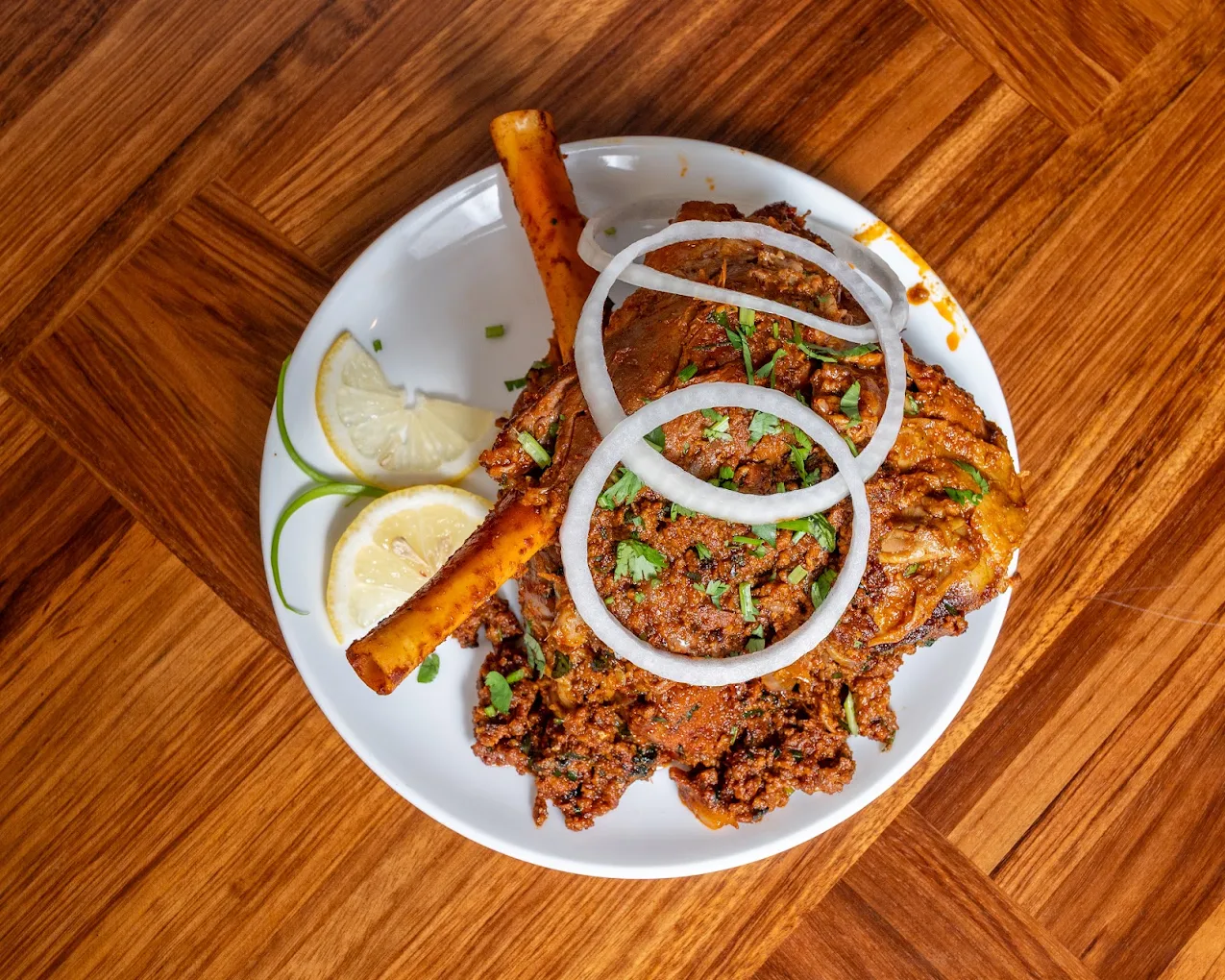
House of Biryanis & Kebabs in Johns Creek operates as a fully halal kitchen, meaning every meat dish on the menu, from Hyderabadi Chicken and Goat Dum Biryani to Tandoori Chicken and Goat Haleem, follows halal sourcing and preparation standards. This removes the need for diners to ask about individual dishes one by one, since the entire non-vegetarian menu, alongside a full range of vegetarian and South Indian tiffin items, is prepared under the same standard. You can review the full Indian restaurant menu to see the biryani, tandoori, South Indian, and Indo-Chinese sections organized by category, all within a halal kitchen.
Halal restaurants often carry the same regional variety as any other Indian kitchen, so there is no need to limit an order to a single "safe" dish out of caution. A Hyderabadi Goat Dum Biryani offers a rich, slow-cooked introduction to halal meat preparation, while Tandoori Chicken shows off the kitchen’s grilling technique using the same certified sourcing. For something slower and heartier, Goat Haleem, traditionally associated with Ramadan and special occasions, demonstrates how halal meat holds up in a long-simmered dish. Pairing any of these with a vegetarian South Indian tiffin item, such as a Paneer Masala Dosa, rounds out a group order without anyone needing to check ingredients dish by dish.
Halal covers the full preparation chain, including the zabiha slaughter method, avoidance of alcohol as an ingredient, and careful handling to prevent cross-contamination with non-halal ingredients or shared equipment. Avoiding pork is only one part of a much broader standard.
No. While both share some restrictions, such as prohibiting certain animals and requiring a specific slaughter method, kosher law additionally prohibits mixing meat and dairy, while halal law prohibits alcohol as an ingredient. The two standards overlap in places but are not interchangeable.
No. Halal restaurants serve diners of all backgrounds, and many non-Muslim diners choose halal food specifically for its documented sourcing standards and the freshness associated with the zabiha slaughter method.
Yes. Diners can order Indian food online for pickup from a fully halal menu, with the same biryani, kebab, haleem, and South Indian dishes available for takeout as for dine-in.
Understanding what halal certification actually requires, rather than assuming it simply means "no pork," makes it much easier to evaluate whether a restaurant genuinely meets the standard or only avoids the most visible ingredient. A kitchen that applies halal sourcing across its entire menu, rather than a handful of dishes, tends to be the more reliable choice for diners who take the standard seriously. For questions about specific ingredients, certification details, or catering for religious occasions, it is worth reaching out directly, and you can contact House of Biryanis & Kebabs in Johns Creek with any specific questions.
House of Biryanis & Kebabs — 11030 Medlock Bridge Road, Johns Creek, GA 30097



Find Us
Business Hours