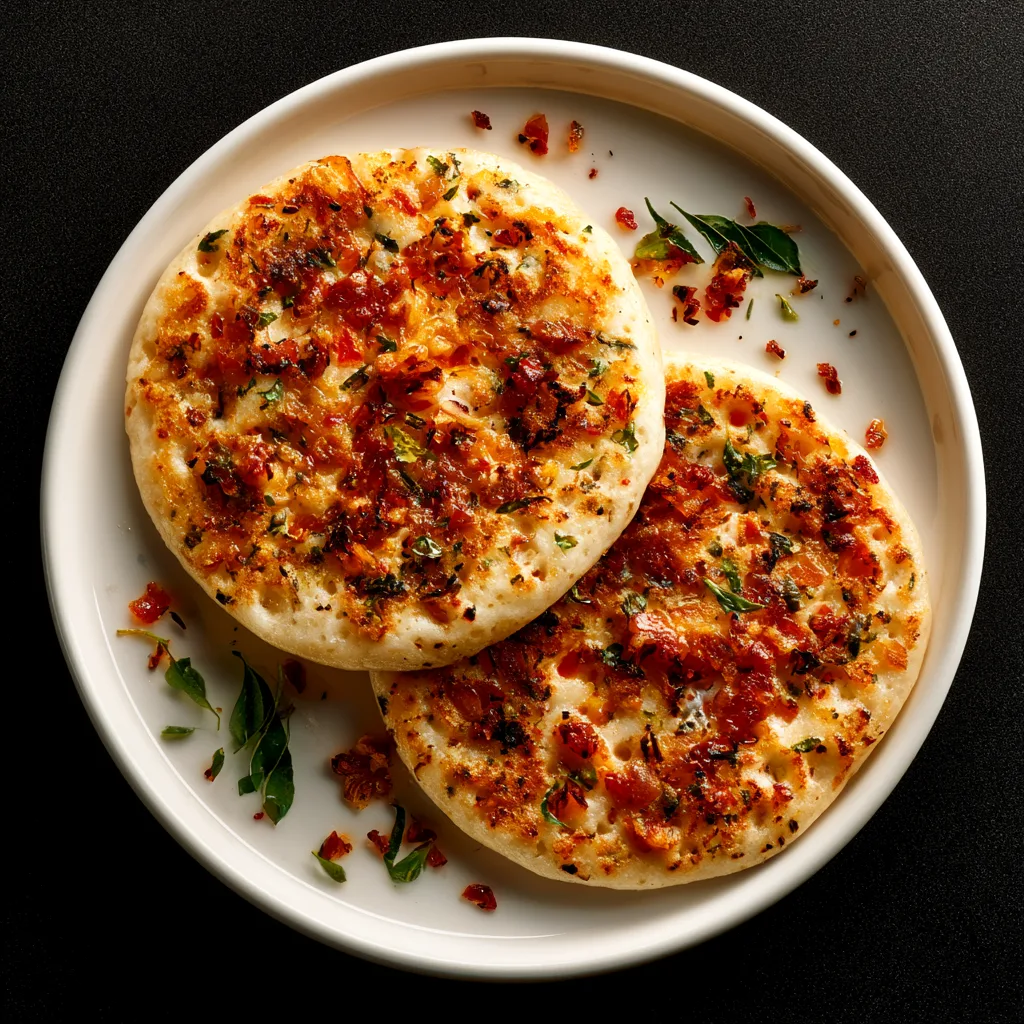
A search for uttapam near me usually comes from someone who already knows the dish, rather than someone discovering it for the first time, since uttapam is less universally recognized outside South India than dosa or idly. That makes it a search worth answering well, because the person typing it is often specifically craving a thick, topping-loaded pancake rather than a thin, crisp crepe, and a restaurant that doesn't distinguish between the two risks serving the wrong expectation entirely. Before placing an order, it helps to understand what actually makes uttapam its own dish, which starts with looking at what an Indian restaurant in Johns Creek, GA needs to get right to serve it properly.
This guide covers what uttapam actually is, how it differs from dosa, the variations worth knowing, and where to find it locally.
Uttapam is a South Indian savory pancake made from the same fermented rice and lentil batter used for dosa, but cooked thick rather than spread thin, with toppings pressed directly into the batter as it cooks rather than folded inside afterward. The name itself, sometimes spelled uthappam or oothappam, comes from Tamil roots referring to a pressed or flattened cake. Unlike dosa's crisp, crepe-like texture, uttapam has a soft, slightly spongy interior with a lightly browned, textured exterior where the toppings caramelize against the griddle.
The confusion between uttapam and dosa makes sense, since both start from an identical fermented batter of rice and urad dal left to rise for several hours. The difference comes entirely from technique after that point. Dosa batter is poured thin and spread across a hot griddle in a circular motion, cooking quickly into a crisp, lacy crepe. Uttapam batter is poured thicker and left largely undisturbed, with chopped vegetables, onions, or spices scattered directly on top and pressed in before it finishes cooking, producing a denser, more bread-like result closer to a savory pancake than a crepe. Someone searching uttapam near me is generally looking for that thicker, topping-forward texture specifically, not a thin dosa with a different name.
Uttapam varies mainly by what gets pressed into the batter before it finishes cooking, with a few versions appearing on most South Indian menus. Plain Uttapam skips toppings entirely, letting the fermented batter's natural tang carry the dish. Onion Uttapam presses chopped onions into the surface, adding a light sweetness as they caramelize against the hot griddle. Podi Uttapam incorporates a dry, roasted lentil and spice powder known as podi, giving it a nuttier, more savory edge than the onion version. Mix Veg Uttapam combines several chopped vegetables, such as onion, tomato, and bell pepper, into one thicker, more substantial pancake. A 5 Variety Uttapam typically serves a sampling of different toppings on one plate, useful for diners who want to compare versions in a single order rather than committing to just one.
Because uttapam is cooked thick rather than thin, it requires a longer, gentler cooking time than dosa to cook through evenly without burning the exterior before the center sets. A rushed uttapam often ends up with a raw, gummy middle beneath a browned surface, which is one of the more common signs of a kitchen unfamiliar with the dish rather than simply treating it as a thicker dosa. Getting this right requires patience at the griddle, lower heat than a standard dosa, and enough time for the toppings to properly caramelize into the batter rather than just sitting loosely on top.
House of Biryanis & Kebabs in Johns Creek carries a full uttapam lineup rather than a single generic version, including Plain Uttapam, Onion Uttapam, Podi Uttapam, Mix Veg Uttapam, and a 5 Variety Uttapam for diners who want to sample several toppings at once. A Mini Uttapam also appears as part of the Tiffin Platter alongside idly, vada, upma, and pongal, giving first-time visitors a smaller-portion way to try it alongside other South Indian tiffin items. For a search like uttapam near me, that range signals a kitchen treating uttapam as its own specialty rather than an afterthought on a generalist menu. You can review the full Indian restaurant menu to see the complete uttapam, dosa, and tiffin sections listed by category.
No. Both use the same fermented rice and lentil batter, but dosa is spread thin and cooked quickly into a crisp crepe, while uttapam is poured thicker with toppings pressed into the batter, producing a softer, more pancake-like result.
Common toppings include chopped onions, tomatoes, green chilies, and a roasted lentil spice powder called podi. Mix Veg Uttapam combines several of these into one pancake, while Plain Uttapam skips toppings entirely to highlight the fermented batter itself.
Its thicker batter needs a slower, lower-heat cook to set the center fully without burning the exterior, unlike dosa, which cooks quickly because it's spread thin. Rushing this step often leaves the center undercooked beneath a browned surface.
Yes. Diners who prefer takeout can order Indian food online for pickup, though uttapam, like other tiffin items, is best enjoyed fresh and close to when it's cooked for the best texture.
Finding a kitchen that treats uttapam as a dish in its own right, with real variety and a proper slow cook, rather than as an interchangeable stand-in for dosa, tends to make a noticeable difference in the final plate. For questions about specific varieties, portion sizes, or group orders, it's worth reaching out directly, and you can contact House of Biryanis & Kebabs in Johns Creek with any specific questions.



Find Us
Business Hours